
TPMS for RTG Cranes
The Rubber Tired Gantry crane (RTG) is the backbone of container stacking in ports and intermodal yards, straddling multiple lanes of containers on a set of tired bogies at each corner. Because an RTG runs on far more tires than a typical OTR vehicle, and because those tires carry the full static and dynamic weight of the crane and its load, tire condition has an outsized effect on both safety and terminal productivity. This page explains how TPMS for RTG cranes helps terminals manage this.
What is a Rubber Tired Gantry Crane?
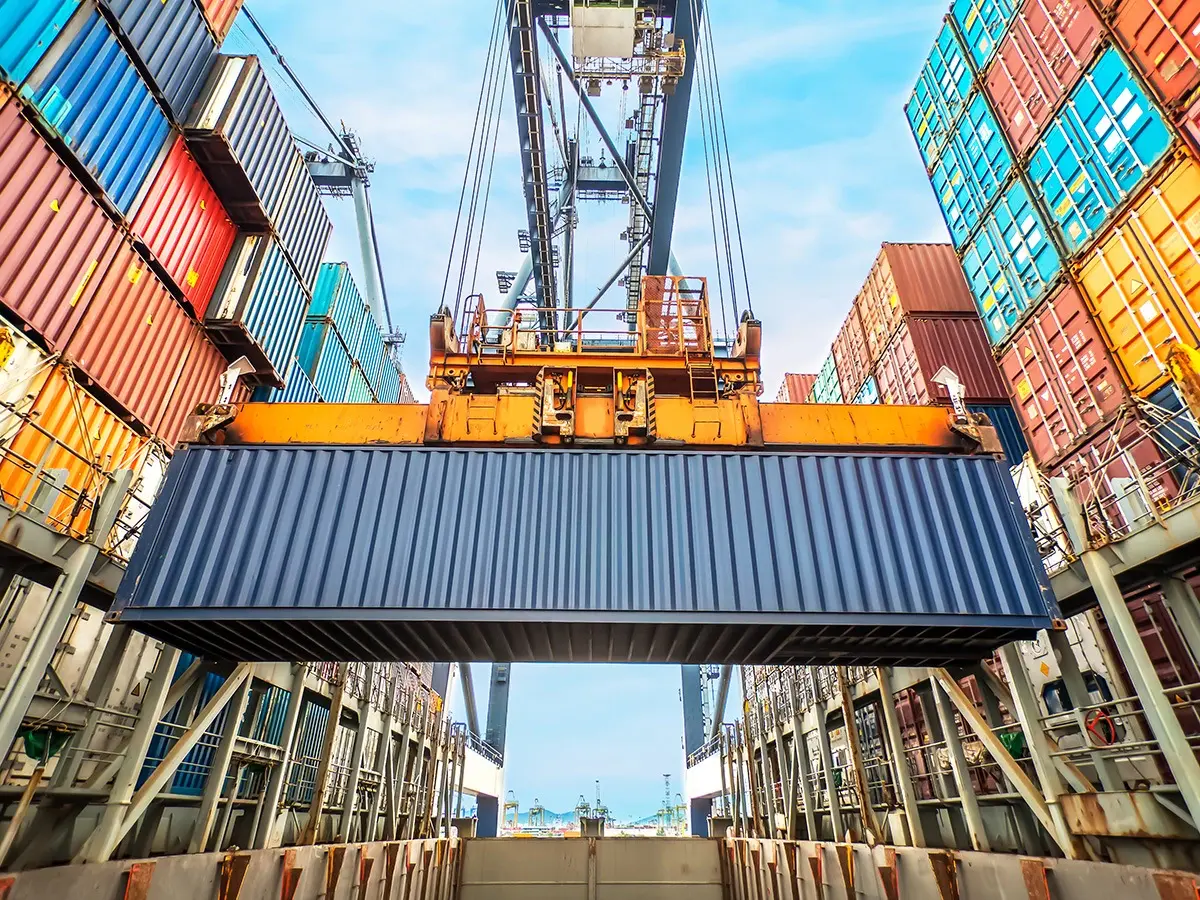
An RTG is a mobile container-stacking crane that runs on rubber-tired bogies rather than rails, allowing it to move between stacking blocks as terminal demand changes. It spans a set number of container rows, plus a truck lane, and can typically stack containers several rows wide and several high, lifting them from trucks or rail wagons into the stack and back again.
Leading manufacturers include:
- Konecranes
- Liebherr
- ZPMC
- Kalmar
- SANY
RTGs run on diesel, hybrid, fully electric or battery power depending on the terminal, and are equipped with multiple bogies, each carrying several tires, at each corner of the gantry structure.
The operating challenge
An RTG typically works a fixed block of the yard, moving along its rows continuously through a shift. Because the crane’s own structure, plus every container it lifts, is carried entirely on its tires, uneven tire condition across the many wheel positions can affect the crane’s stability, steering and structural loading, not just its uptime.
Tire risks specific to RTGs
The wheel configuration of an RTG creates tire risks that are different from a typical wheeled vehicle:
- Uneven pressure across multiple bogies and tire positions, which is very difficult to detect visually
- Heat build-up from continuous driving and cross-driving along the stack
- Under-inflation, which increases rolling resistance and accelerates uneven wear across the bogie
- Sidewall and tread damage from yard debris, kerbs and container corner castings
Because an RTG has so many tire positions, a developing fault on just one wheel can be very hard for maintenance staff to spot without instrumentation, until it becomes a serious failure.
How TPMS protects RTG tires
A TPMS for RTG cranes monitors pressure – and, where required, temperature – across every tire position on every bogie, giving maintenance teams a complete picture of the crane’s tire condition rather than relying on periodic manual checks. Because RTGs run on a fixed schedule within a busy stacking block, early warning of a developing issue allows tire attention to be planned without disrupting the yard’s container flow.
Benefits of TPMS on RTGs
- Full visibility across every bogie and tire position, not just the tires that are easy to inspect
- Fewer unplanned stoppages in a busy, schedule-driven stacking block
- Improved crane stability and structural safety through even tire condition
- Lower energy consumption from correctly inflated tires
- A complete tire history across a large number of wheel positions per crane
Fleet visibility and data ownership
With so many tire positions across an RTG fleet, a cloud-based TPMS portal is essential for making sense of the data – giving terminal maintenance teams real-time alerts and a full audit trail for every tire on every crane. This data remains owned and controlled by the terminal operator.
Choosing the right TPMS for your RTG fleet
Because an RTG has more tire positions than almost any other OTR vehicle, the TPMS needs to scale cleanly across many sensors per machine while remaining simple to install and maintain. TMS® supplies TPMS for RTG cranes and other port equipment, designed for exactly this kind of multi-wheel application.
Request a free trial to see how TMS® can improve tire visibility across your RTG fleet.